
In a powerful testament to resilience and love, a lesbian couple in Nepal has succeeded in registering their marriage—despite institutional hurdles, family opposition, and police interference. The case of Sushila Ramtel from Sindhuli and Pramila Tamang from Dhading exposes the deep disconnect between constitutional rights and their practical implementation for sexual and gender minorities in Nepal.
For two years, Sushila and Pramila were in a committed same-sex relationship. When they approached local authorities in Sindhuli’s Sunkoshi Rural Municipality Ward No. 6 for legal marriage registration, their request was met with ignorance and delay. Ward Secretary Dandapani Bhandari, who had only recently been transferred to the ward, cited unfamiliarity with the law and insisted he needed 15 days to "study" the issue—despite a clear directive from the Supreme Court and the Home Ministry.
On June 27, 2023 (Asar 12, 2080 BS), the Supreme Court of Nepal had issued an interim order recognizing same-sex marriages. Later, on April 24, 2024 (Baisakh 12, 2081 BS), the Home Ministry’s Department of National ID and Civil Registration circulated a directive to all 753 municipalities and rural municipalities, instructing them to register same-sex and third-gender marriages.
Still, local officials like Bhandari had not studied the directive posted on the department’s official website. In the meantime, the couple’s marriage application was stalled, and Bhandari left for Kathmandu, delaying the process further.
Tensions escalated when families got involved. Pramila’s family suddenly grew hostile during a reconciliation attempt. Sushila’s family, particularly her father, Lal Kaji Ramtel, remained steadfast, even when subjected to caste-based slurs and homophobic taunts. When Lal Kaji contacted Ward Secretary Bhandari to advocate for his daughter, Bhandari allegedly dismissed the official directive as possibly fake and avoided further engagement by promising to "meet at Singha Durbar."
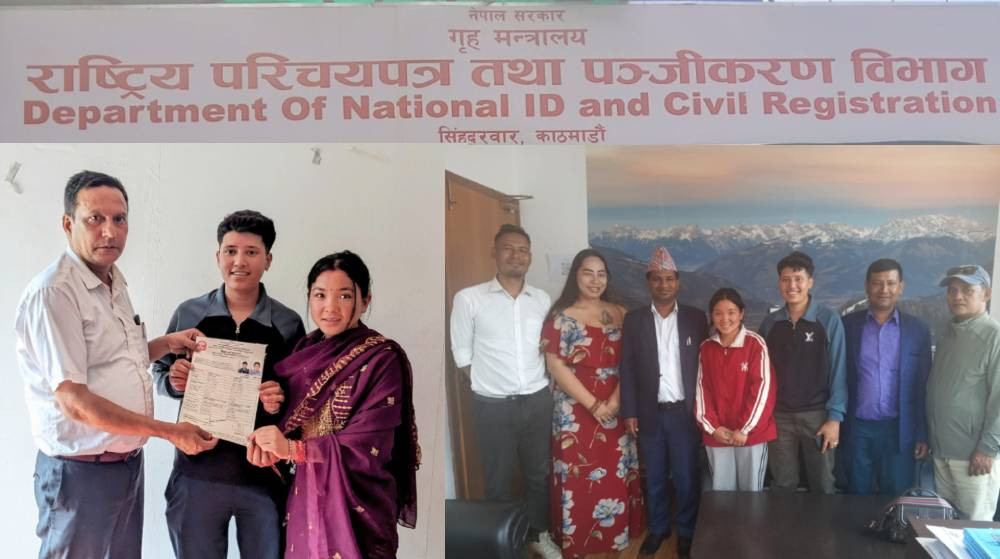
Eventually, Lal Kaji reached out to MayaKo Pahichan Nepal, an LGBTQI+ advocacy organization led by South Asia’s first legally registered same-sex couple, Surendra Pandey and Maya Gurung. Alongside activist Numa Limbu (Chanchala), Mr. Gay Handsome Nepal titleholder Manindra Singh Danuwar, and the couple's supporters, the group approached Director Mukesh Kumar Keshari of the Department of Civil Registration with a formal complaint.
Director Keshari immediately attempted to reach Ward Secretary Bhandari by phone and message. Despite no response, he firmly stated that local officials cannot refuse to register same-sex marriages, as the Supreme Court’s decision, ministerial directives, and official circulars leave no room for denial.
Meanwhile, Pramila’s family tried to forcibly separate her from Sushila, filing a false “missing person” report to the Lalitpur Police. Although Pramila clearly told the Women’s Cell at the District Police Office in Lalitpur that she did not feel safe with her family, police allowed her brother and sister-in-law to take her away—allegedly on orders from SSP Shyam Krishna Adhikari.
Just three days later, Pramila escaped and returned to Sushila. On the request of former Constituent Assembly member Sunil Babu Pant, Oxfam in Nepal provided safe shelter for the couple. The following Tuesday, they went to Singha Durbar, and on Wednesday, their marriage was finally registered—Nepal’s second official same-sex marriage.
Though legal recognition exists, the couple’s ordeal shows that accessing these rights still requires navigating systemic inertia, discrimination, and personal risk. Rights, it seems, still demand a pilgrimage to Singha Durbar.
Director Keshari noted that most ward secretaries lack adequate knowledge on same-sex marriage registration, prompting the Department to begin training them using educational video messages. Yet, activists like Numa Limbu (Chanchala) say this is not enough. "Requiring citizens to travel to Singha Durbar to exercise a right is itself a failure of the state," she said. "The government must move from making people demand rights to enabling them to practice them freely."